




Getting liquidated on Blofin - or any exchange - usually comes down to two things: wrong leverage settings and no risk management plan. This guide covers both. We’ll walk through exactly how leverage works on Blofin, which settings to use based on your experience level, and the risk management system that keeps you in the game long-term.
Whether you’re brand new to Blofin or refining your approach after some painful losses, everything you need is here.
Part 1: Understanding and Setting Leverage on Blofin
Before diving into risk management, you need to understand the leverage tool itself, what it does, how Blofin implements it, and which settings make sense for your level.
What Is Leverage and How Does It Work on Blofin?
Before adjusting your blofin leverage settings, you need to understand how margin and leverage actually function on the platform. Leverage allows you to control a larger position size with a smaller amount of capital.
Blofin allows you to amplify trades with leverage up to 150x, but without the right blofin leverage settings, the risk of liquidation is extremely high. For example, a 1% move against your position at 100x leverage can wipe out your entire margin.
On Blofin:
- You choose your leverage level before opening the trade
- Your liquidation price is automatically calculated
- Higher leverage = tighter liquidation range
Quick Example:
- $100 trade at 5x leverage → controls $500
- $100 trade at 50x leverage → controls $5,000
The higher the leverage, the faster your gains, and losses, move. That’s why it’s critical to pair your blofin leverage settings with strong risk management.
Want help getting started? Read our full walkthrough on how to use Blofin step by step.

Isolated vs Cross Margin: What Blofin Beginners Need to Know
One of the most important blofin leverage settings is choosing between isolated and cross margin, and most beginners should always start with isolated. These two settings control how much of your account balance is at risk when a trade moves against you.
Making the wrong choice here can wreck your account, even with conservative blofin leverage settings. Isolated margin only risks the funds you allocate to that specific position, while cross margin can drain your entire balance if the trade goes bad.
Margin Type Comparison Table
| Margin Type | Risk Level | Best For | Liquidation Impact |
|---|---|---|---|
| Isolated | Lower | Beginners | Limited to trade only |
| Cross | Higher | Advanced traders | Drains entire account |
In most cases, Blofin will default you to isolated, and that’s a good thing. It’s the safer setting while you’re learning to trade.
Recommended Leverage Ranges by Experience Level
To get the most out of your blofin leverage settings, you need to match your risk level to your actual skill level. Going too high too soon is one of the most common causes of rapid liquidation.
We’ve broken down the best blofin leverage settings by experience, from total beginner to semi-pro. Use this table as a guideline until you’ve built enough confidence to experiment safely.
Leverage Range Recommendations
| Experience Level | Recommended Leverage | Why |
|---|---|---|
| Beginner | 2x - 5x | Low liquidation risk |
| Intermediate | 5x - 10x | Balanced control & reward |
| Advanced | 15x - 50x | Requires fast execution & SL |
If you’re just getting started, keep it simple. Even 3x leverage can lead to strong gains on volatile pairs like BTC/ETH when managed correctly.
Want to see how this compares to other platforms? Read Blofin vs Bitget for more side-by-side details.
Avoiding Liquidation with Smart Leverage on Blofin
No matter what blofin leverage settings you choose, avoiding liquidation comes down to risk discipline. Many traders get wiped out not because of bad market calls, but because they over-leverage and don’t use stop-losses.
Smart blofin leverage settings won’t save you if you enter blindly or go all-in on one trade. It’s the combination of proper sizing, margin type, and exit planning that protects your capital.
4 Key Tips to Avoid Liquidation:
- Use stop-loss orders . Set them based on technical levels, not emotions.
- Stick to isolated margin . Don’t risk your full balance on one position.
- Size your trades conservatively, 1-2% of your balance per trade is ideal.
- Avoid stacking leverage . Don’t open multiple high-leverage positions at once.
Even at just 3x-5x leverage, if your stop-loss is wide or your entry is poor, you’re at risk. Keep it clean, simple, and calculated.
Want even more control over your account access? See our guide to the best low-verification crypto exchanges.

Common Mistakes Traders Make With Blofin Leverage
Using high blofin leverage settings without a clear plan is one of the fastest ways new traders get wiped out. Leverage is a tool, not a magic button, and when it’s misused, it turns against you fast.
Other mistakes include cross margin misuse, revenge trading, and skipping SL even with conservative blofin leverage settings. These small decisions add up to massive losses over time.
Top 5 Mistakes to Avoid:
- Maxing out leverage for fun . High leverage isn’t a thrill ride, it’s a trap.
- Using cross margin by default . You risk your full account on one trade.
- Not setting stop-loss orders . Even at low leverage, this is a recipe for disaster.
- Opening multiple trades at once . Each adds risk, especially if over-leveraged.
- Trading emotionally after a loss . Revenge trades at high leverage often end badly.
Part 2: Risk Management. How to Trade Without Getting Liquidated
Now that your leverage is set correctly, here’s the defense system that prevents liquidation.
Blofin Risk Management Tip #1: Use Isolated Margin, Not Cross
One of the first blofin risk management tips you’ll hear from seasoned traders is to use isolated margin instead of cross. This may be the most important of all blofin risk management tips for beginners trying to avoid full account wipeouts.
The Blofin exchange defaults to isolated margin for a reason, it helps limit your losses to a single position. Crypto futures without lengthy verification doesn’t mean crypto futures without risk, managing your margin type is your safety net.
Margin Type Comparison Table
| Margin Type | Capital at Risk | Best For | Auto Liquidation Impact |
|---|---|---|---|
| Isolated | Only assigned funds | Beginners | Limited to trade only |
| Cross | Entire account | Advanced users | Can drain full account balance |
Stick with isolated until you fully understand how leverage, exposure, and liquidation interact. Even professionals use it when they want to keep trades compartmentalized.
Want to master the basics first? Check out our step-by-step guide to using Blofin.
Don’t Skip Stop-Loss Orders
Among all blofin risk management tips, using a stop-loss is non-negotiable. Without stop-loss protection, even conservative blofin risk management tips fall apart during volatility.
One advantage of trading on the Blofin exchange is that stop-loss settings are built directly into the trade panel. This is important when you trade on Blofin with leverage, especially during sudden price swings.
Quick Stop-Loss Tips:
- Set your SL below recent support or above key resistance
- Use percentage-based SL for consistency (e.g. 2-3%)
- Never enter a trade without defining your max risk first
Stop-losses aren’t just tools, they’re rules. Use them every single trade.
Set Position Sizes Based on Your Balance
Another of our most important blofin risk management tips is to size your trades based on your account balance, not your emotions. Good blofin risk management tips start with discipline, and that begins with knowing your limits per trade.
Whether you’re using crypto futures without lengthy verification or not, capital preservation is your #1 priority. The best traders on the Blofin exchange use small sizes and scale only when confident in their edge.
Example Sizing Table (Max 2% Rule):
| Account Balance | Max Risk Per Trade (2%) | Why It Matters |
|---|---|---|
| $100 | $2 | Keeps risk minimal |
| $1,000 | $20 | Allows multiple safe trades |
| $5,000 | $100 | Scalable without stress |
You don’t need big trades to make progress. You need consistent, risk-defined trades that let you stay in the game long enough to learn and win.
Avoid Overlapping Trades and Overleverage
Many traders ignore this next one, but stacking positions is one of the worst blofin risk management tips to break. Effective blofin risk management tips include trading fewer, smarter setups, not opening five trades at once.
When you trade on Blofin, it’s tempting to jump on multiple altcoin pairs, but that compounds risk fast. Crypto futures without lengthy verification is a powerful freedom, but it also requires extra responsibility.
What to Watch For:
- Avoid holding more than 2 trades at once, especially at high leverage
- Never “double down” on losing trades
- Use available margin indicators to prevent accidental overexposure
Less is more. Focus on clean entries and precision instead of volume and hope.
Manage Emotions After a Loss
No list of blofin risk management tips would be complete without covering the psychology of trading. Revenge trading is one of the fastest ways to undo all your blofin risk management tips in a single move.
Just because you can trade on Blofin instantly doesn’t mean you should react emotionally to every price move. The freedom of crypto futures without lengthy verification still requires the discipline of professional habits.
Reset After a Loss:
- Step away for 10-15 minutes
- Review what triggered your decision, emotional or strategic?
- Write down one thing you’ll do differently next time
Emotional discipline isn’t optional, it’s the glue that holds your entire risk strategy together.
Recap: Your Risk Management Checklist
Here’s a quick recap of the blofin risk management tips every beginner should master before increasing leverage. These blofin risk management tips aren’t just theory, they’re used by real traders to survive real volatility.
The Blofin exchange gives you tools to protect yourself, but you still have to use them. If you want to trade on Blofin safely and grow over time, build a checklist and follow it on every trade.
✅ Risk Management Checklist:
- Use Isolated Margin ✅
- Place Stop-Loss Orders ✅
- Size Trades Based on Balance ✅
- Avoid Overlapping High-Leverage Positions ✅
- Pause and Reset After Losses ✅
Start slow. Stay disciplined. And always remember: survival is your first trading milestone.
Want a deeper look at minimal verification platforms like Blofin? Check out our guide to the best crypto futures trading exchanges.
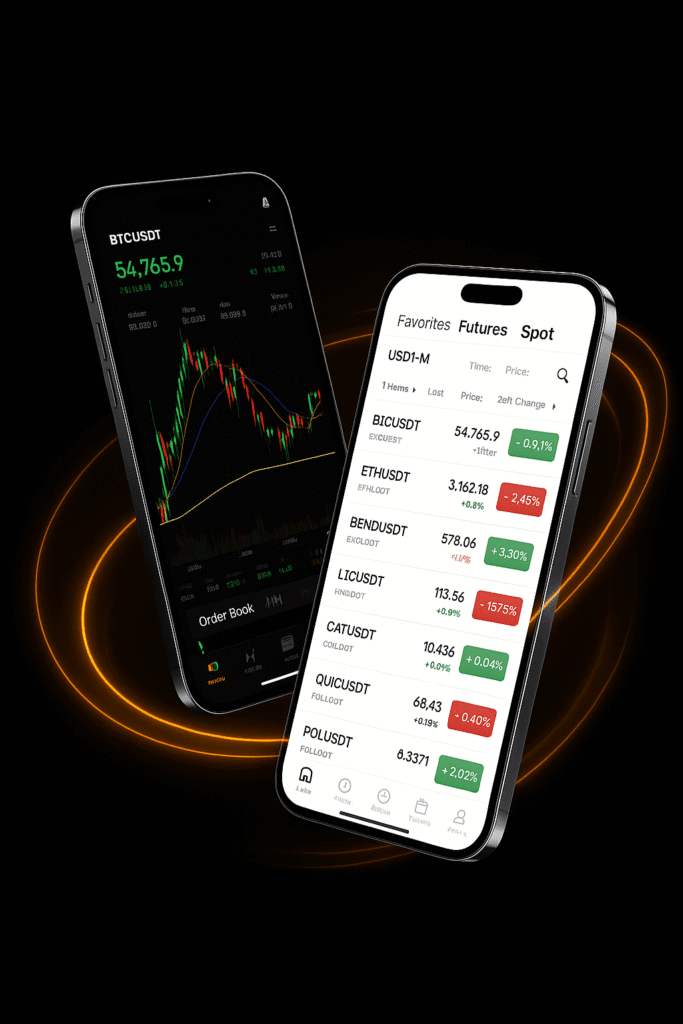
How Blofin’s Interface Helps You Manage Risk
One of the lesser-known blofin risk management tips is to take full advantage of Blofin’s user interface, it’s built for clarity and control. When applying blofin risk management tips, having real-time PnL tracking, leverage sliders, and liquidation data at your fingertips is a huge advantage.
The Blofin exchange gives you full visibility into margin usage, funding rates, and order size impact before you even open a trade. Trading on Blofin becomes much less stressful when you use the platform’s built-in risk tools correctly.
Built-In Risk Control Features:
- Isolated margin is the default setting
- Leverage is selected with an intuitive slider (1x to 150x)
- Liquidation price shows in real-time during order setup
- Take-profit and stop-loss checkboxes appear before confirmation
- Margin usage alert bar warns you when overexposed
Instead of relying on memory or emotion, let the platform do the heavy lifting. Use every tool Blofin provides to trade safer and smarter.
🔗 Still comparing platforms? Read our Blofin vs Bitget comparison to see how they stack up.

Learn From Your Own Trades: Risk Journaling Strategy
Among advanced blofin risk management tips, journaling your trades is the one habit that quietly builds long-term mastery. By reviewing what worked and what didn’t, you turn your blofin risk management tips into a repeatable system.
Whether you trade on Blofin occasionally or every day, keeping a quick risk log helps prevent repeated mistakes. Crypto futures without lengthy verification give you fast access, but smart traders slow down after the trade to reflect.
Quick Risk Journal Template:
- Entry Reason: Why did you take this trade?
- Size & Leverage: How much risk did you assume?
- Stop-Loss Plan: Did you use one? Was it honored?
- Emotional State: Calm, confident, rushed, reactive?
- Outcome & Review: What worked? What will you adjust next time?
You don’t need a fancy notebook or app, a simple spreadsheet or notes app works. The goal is awareness, not perfection. The more you track, the better you’ll trade.
Final Thoughts: Trade Smarter, Stay in the Game
Blofin is the ideal place to apply these blofin risk management tips because it gives you full control over margin and leverage with minimal verification. If you want to build consistent habits, avoid liquidation, and grow as a trader, this is where to start.
Ready to apply smart blofin risk management tips and take control of your trading?
🔥 Start trading on Blofin with up to 150x leverage and minimal verification by clicking here.
CryptoPulseHQ is a crypto-focused publication built by professional traders, for traders. With over 6 years of experience in the crypto space, our mission is to simplify exchanges, tools, and strategy, so you can trade smarter and stay one step ahead.
We publish daily guides, comparison blogs, and step-by-step tutorials to help you navigate the fast-moving world of crypto with clarity and confidence.
This guide was written by a cryptocurrency researcher with extensive experience in altcoin platforms, decentralized trading tools, and global exchange analysis. Our goal is to help users trade securely and responsibly through transparent education. -