

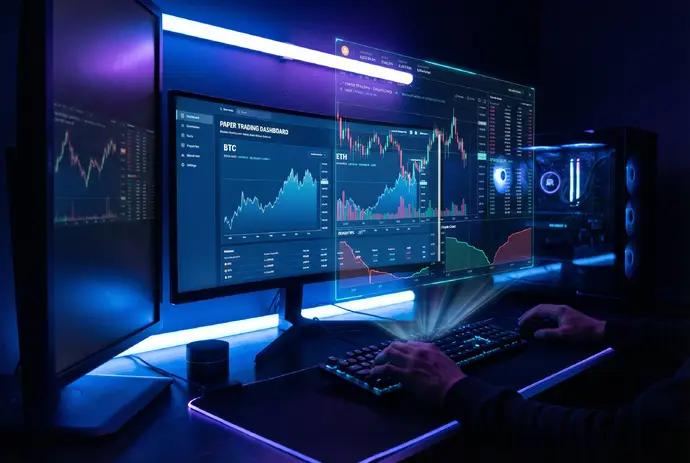
A crypto trading simulator lets traders test ideas with fake capital while the market keeps moving in real time. That matters in April 2026, when Bitcoin is trading near $71,168 based on Yahoo Finance market data, Ethereum is around $2,195 on the same feed, and the Alternative.me Fear and Greed Index is sitting at 12, firmly in extreme fear territory. In a market this jumpy, paper trading can help you build process before you put actual money on the line.
The catch is simple: a simulator can teach execution, but it cannot fully reproduce the stress, slippage, and bad decisions that show up when real capital is at risk. Used well, it is a training tool. Used badly, it can create a false sense of readiness before real money is at risk.
What a crypto trading simulator actually does
A crypto trading simulator mirrors live or delayed market data and lets you place simulated spot or futures trades without sending real orders to an exchange. Most platforms call this paper trading, demo trading, or sandbox trading. The basic idea is the same. You get virtual balance, live charts, order-entry tools, and a way to track wins, losses, and strategy performance.
For beginners, the main benefit is repetition. You can practice reading entries, setting stops, and sizing positions before money enters the picture. If you are new to chart structure, our guide to reading crypto charts is the right foundation before you open any simulator.
Disclosure: CryptoPulseHQ may earn from partner links in this article.
Practice the setup, then trade the live market
Once your crypto trading simulator routine is consistent, some traders move to a live venue like Bitunix. As of this writing, the exchange is advertising a new-user bonus that can reach $5,500, although promo terms can change quickly.
How to use a crypto trading simulator without fooling yourself
The best way to use a crypto trading simulator is to treat it like a lab, not a game. Pick one market, one timeframe, and one setup. Record the entry trigger, the invalidation level, the target, and the reason for the trade. Then follow that plan over a meaningful sample size. Twenty random demo trades tell you almost nothing. One hundred trades with the same rules start to tell you something useful.
You should also track the metrics that survive outside the simulator: win rate, average reward-to-risk, maximum drawdown, and whether your setups work better in trend or range conditions. Traders who want a broader primer should also read our beginner guide to trading cryptocurrency and our breakdown of crypto day trading in 2026.
One practical rule helps a lot: if you would not take the setup with real money, do not take it in the simulator. Demo accounts make it too easy to overtrade, revenge trade, or fire off oversized positions because losses do not hurt. That habit can leave traders badly exposed once real fills, fees, and slippage start to matter.
Crypto trading simulator features that matter in 2026
Not every crypto trading simulator is worth your time. In 2026, the useful ones tend to share a few core features.
- Real-time price feeds: The closer the data is to live exchange conditions, the better.
- Spot and futures support: Many traders want to practice both simple buys and leveraged trades.
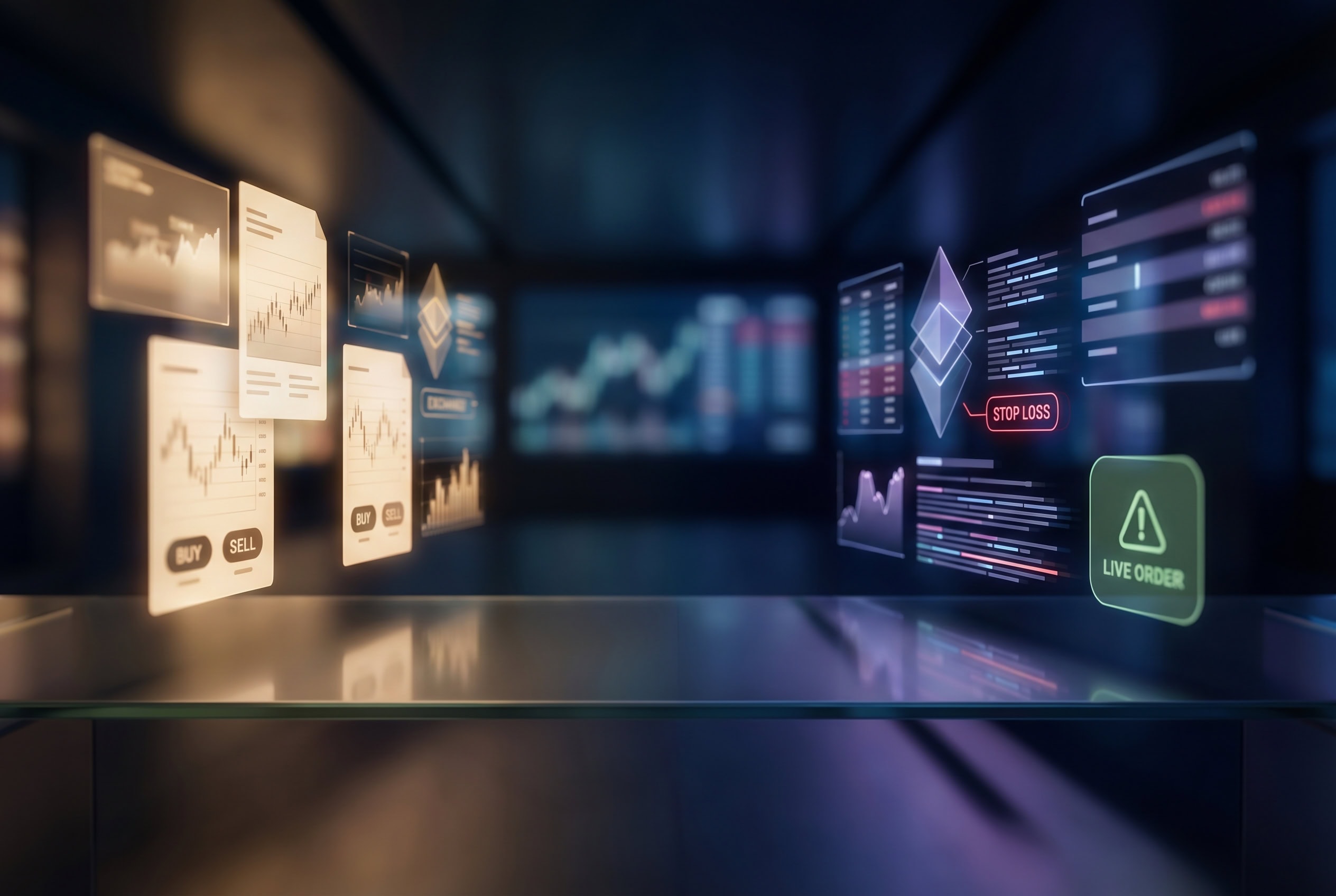
- Order types: Market, limit, stop-loss, and take-profit tools should work like they do on a real venue.
- Trade journal and analytics: If the simulator cannot show your history, patterns, and mistakes, it is mostly entertainment.
- Fees and funding assumptions: Futures traders need a realistic view of trading costs and funding drag.
- Multi-device access: Traders often test on desktop and monitor on mobile.
If you are testing exchange-specific strategies, a platform tutorial matters too. For example, traders moving from demo mode into real execution may want to review this Bitunix trading tutorial so the live interface feels familiar before real orders go out.
More advanced users sometimes use a crypto trading simulator to test spread or arbitrage ideas. If that is your lane, see our explainer on how crypto arbitrage scanners work and our review of crypto arbitrage bots in 2026.
Where crypto trading simulator results break down
One limitation shows up fast once traders switch from demo results to live execution. A crypto trading simulator does not recreate emotional pressure. It also rarely captures full liquidity conditions, execution lag, spread widening, partial fills, or the feeling of watching your real account swing against you. Simulated results usually look cleaner than live results.
That gap matters even more in fearful markets. With sentiment stuck at extreme fear, price can move sharply on headlines, thin liquidity, or liquidation cascades. A demo account might show a clean stop fill. A live order during a violent move might slip well past that level.
Another issue is selection bias. Traders remember the demo strategy that worked and ignore the ones that failed. That is why a written playbook matters. You need rules for when a setup is valid, what invalidates it, and when to stop trading for the day.
When the simulator says your system is ready
Move carefully from paper trading to small live size. If you do move to Bitunix, note that the exchange says its current new-user bonus can reach $5,500, but those offers can change.
Best practice for moving from simulator to live trading
The cleanest progression is simple. First, prove you can follow one strategy in the simulator for at least four weeks. Second, move to very small real size, small enough that losses feel manageable. Third, compare live results against demo results and adjust for slippage, fees, and emotional mistakes.
Do not jump from fake money to full-size leverage. That is how traders turn a useful training phase into an expensive lesson. If you are still building discipline, even a lower-stress approach like dollar-cost averaging into crypto may suit you better than trying to force short-term trades every day.
Bottom line on using a crypto trading simulator
A crypto trading simulator is worth using if you treat it as structured practice. It helps you learn the mechanics of orders, test setups, and build a journal before real losses enter the picture. But it is not proof that you are ready for size, leverage, or a full-time trading plan.
In this market, with Bitcoin above $71,000, Ethereum near $2,200, and sentiment still stuck in extreme fear, traders need a repeatable process more than bigger opinions. A simulator can help build that process. It just cannot replace the discipline required when the money is real.