

Why Crypto Wallet Security Should Be Your First Priority
Crypto gives you something traditional finance never could: complete ownership of your money. No bank can freeze your account, and no government can seize your funds overnight. But that freedom comes with a tradeoff most beginners don't fully appreciate until it's too late.
You are your own bank. And if your bank gets robbed, there's no FDIC insurance, no fraud department to call, and no chargeback to file.
In 2025, Chainalysis reported that crypto theft reached $3.4 billion, with North Korean hackers alone responsible for over $2 billion. Individual wallet compromises surged to 158,000 incidents affecting 80,000 unique victims. Most of those cases involved private key theft, seed phrase exposure, or compromised signing devices.
The vast majority of these losses were preventable with basic crypto wallet security practices. This guide covers the practical steps you can implement in under an hour to keep your funds safe - whether you're holding $500 or $50,000.
What Hackers Are Actually Doing in 2025
Before you can protect yourself, you need to understand what you're protecting against. Crypto threats fall into a few main categories, and nearly all of them target human behavior rather than blockchain technology itself.
Phishing Attacks
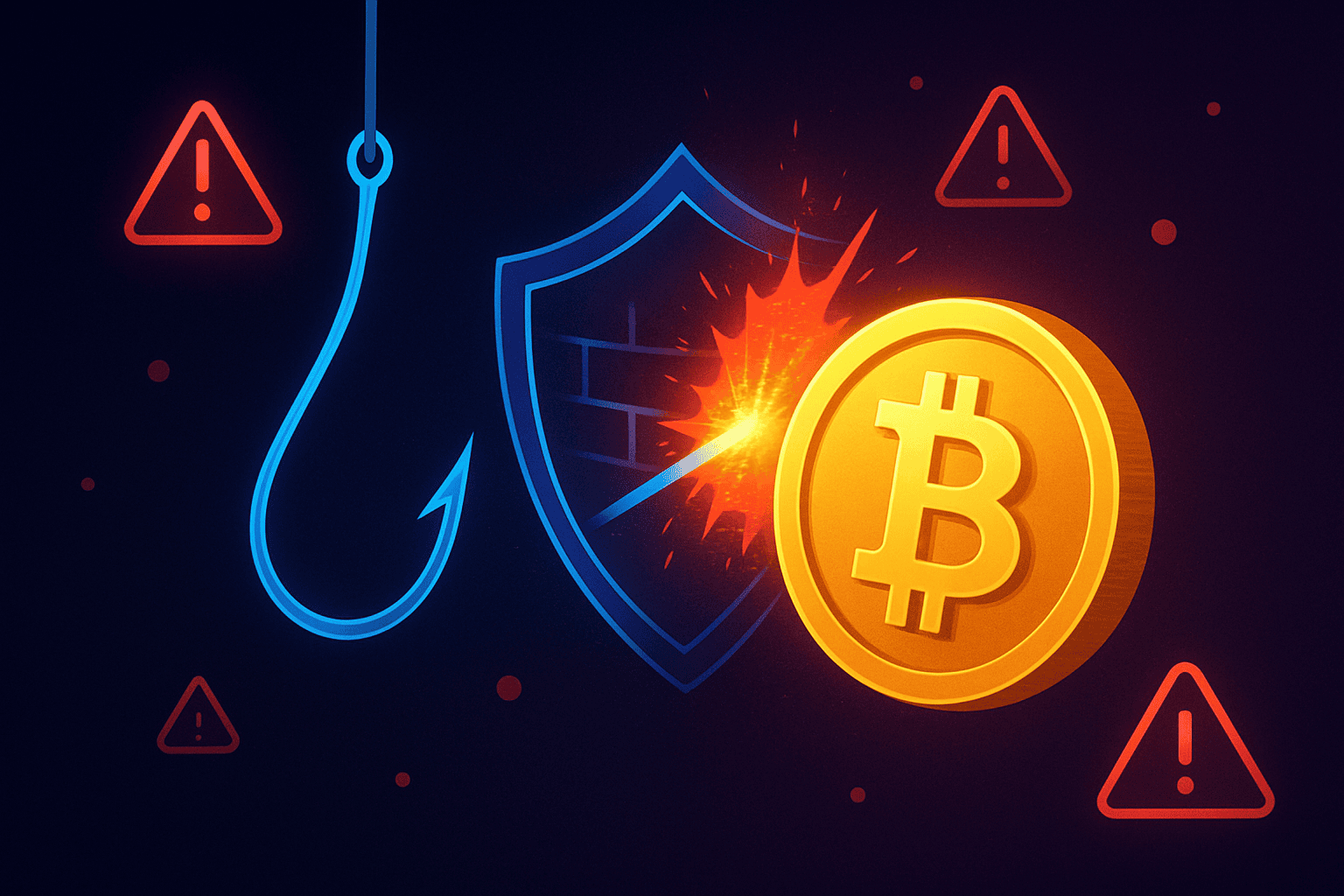
Phishing remains the single most common attack vector in crypto. Attackers create fake versions of popular exchange login pages, wallet interfaces, and DeFi protocols. They distribute these through spam emails, fake social media accounts, and paid search ads that appear above legitimate results.
Address poisoning has become particularly dangerous. Attackers send tiny transactions from wallets with addresses that closely resemble your frequently-used contacts. When you copy a recent address from your transaction history without double-checking every character, you send funds directly to the attacker. In the first half of 2025, wallet drainers caused hundreds of millions in phishing losses across the industry.
Social Engineering
Fake customer support agents, fraudulent job recruiters, and impersonated project founders all use trust to extract sensitive information. These attacks happen constantly on Discord, Telegram, and Twitter. If someone messages you first claiming to be from an exchange or project team, they're almost certainly not.
Malware and Keyloggers
Clipboard hijackers silently replace wallet addresses you've copied with the attacker's address. Keyloggers record everything you type, including passwords and seed phrases. These typically arrive through infected browser extensions, cracked software downloads, or malicious email attachments.
The Crypto Wallet Security Checklist Every Holder Needs
Here's the framework that actually works. Think of wallet security in three layers: storage, access, and behavior.
Layer 1: Storage - Where Your Crypto Lives
Use a hardware wallet for anything you're not actively trading. A hardware wallet (like a Ledger or Trezor) keeps your private keys completely offline. Even if your computer is fully compromised with malware, an attacker cannot access funds stored on a hardware wallet without physical access to the device itself.
The rule of thumb: if losing it would hurt, it belongs in cold storage. Keep only what you need for active trading on exchanges or in hot wallets.
For beginners who aren't ready for hardware wallets yet, here's the minimum standard for a software wallet:
- Download only from official sources (app stores or the project's verified website)
- Verify the developer name matches the official project
- Never install browser-extension wallets from links shared in chat groups
If you already have a hardware wallet setup, make sure you're not making these common cold storage mistakes that can still put your funds at risk.
Layer 2: Access - How You Log In
Enable two-factor authentication (2FA) on every exchange and platform. But not all 2FA is created equal.
SMS-based 2FA is better than nothing, but it's vulnerable to SIM-swap attacks. Attackers call your phone carrier, convince them to transfer your number to a new SIM, and then intercept your verification codes. This happened to thousands of crypto holders in 2025.
Use an authenticator app instead. Google Authenticator, Authy, or the open-source Aegis generate time-based codes that exist only on your physical device. Even if someone has your password, they can't access your account without your phone.
For maximum security:
- Use a dedicated email address for crypto exchanges that you don't use anywhere else
- Create strong, unique passwords for every platform (use a password manager)
- Enable withdrawal address whitelisting where available
- Set up anti-phishing codes on exchanges that offer them
If you're using centralized exchanges, understanding their security features matters just as much as your own practices. Our comparison of top crypto exchanges covers the security features each platform offers.
Layer 3: Behavior - What You Do Daily
Technology alone won't save you if your habits are sloppy. These behavioral practices prevent the majority of attacks:
Never share your seed phrase. Ever. With anyone. No legitimate service, exchange, support agent, or project will ever ask for it. Your seed phrase is the master key to your entire wallet. If someone has it, they own your funds.
Verify every transaction before confirming. Double-check the recipient address, the amount, and the network. One wrong character in an address means permanent loss. When sending large amounts, always send a small test transaction first.
Bookmark exchange and DeFi sites. Never click links from emails, Discord messages, or Twitter posts to access your crypto platforms. Always type the URL directly or use a saved bookmark. This single habit prevents most phishing attacks.
Additional behavioral rules:
- Never do crypto transactions on public Wi-Fi without a VPN
- Don't screenshot or photograph your seed phrase
- Don't store seed phrases in cloud storage, notes apps, or email drafts
- Revoke token approvals on DeFi protocols you're no longer using
- Be skeptical of "urgent" messages about your account
Seed Phrase Backup: Get This Right or Nothing Else Matters
Your seed phrase (usually 12 or 24 words) is the single point of failure for your entire crypto portfolio. Get this right, and you can recover from almost any other mistake.
Write it down on paper or stamp it into metal. Paper works fine for most people, but it's vulnerable to water damage and fire. Metal seed phrase backup plates (available for $20-30) survive both.
Store it in a physically secure location. A home safe, a bank safe deposit box, or another location that's both fireproof and not easily accessible to others. Some people split their seed phrase across multiple locations for additional security.
Never digitize your seed phrase. Don't type it into a computer. Don't take a photo. Don't email it to yourself. The moment your seed phrase exists in digital form, it's vulnerable to every type of cyber attack.
Test your backup. After writing down your seed phrase, verify you can actually restore your wallet with it before loading it with significant funds. You don't want to discover a transcription error when you need to recover your assets.
If you're recovering from a compromised wallet or lost access, our guide to crypto exchange account recovery walks through the process for major platforms. And if the worst has already happened, the crypto scam recovery action plan outlines your options.
What to Do If You Think You've Been Compromised
Speed matters. If you suspect any security breach:
- Move funds immediately. Transfer remaining assets from the compromised wallet to a new, clean wallet. Don't wait to investigate first.
- Revoke all token approvals on the compromised wallet using tools like Revoke.cash or Etherscan's token approval checker.
- Change all passwords on every platform where you used the same or similar credentials.
- Contact your exchange to temporarily freeze your account if you suspect exchange-level compromise.
- Document everything. Screenshots, transaction hashes, and timestamps. You may need these for law enforcement reports.
The first 10 minutes after discovering a compromise determine whether you lose some or all of your funds. Having a plan before you need one is what separates prepared holders from victims.
Start Protecting Your Crypto Today
Crypto wallet security comes down to habits that feel tedious at first but quickly become automatic. The people who lose funds aren't unlucky - they skipped the basics.
Start here: get a hardware wallet, switch to an authenticator app, and write your seed phrase on paper stored somewhere safe. That covers 90% of the attack surface most people are exposed to. Build from there as your portfolio grows.
The $100 you spend on a hardware wallet today could save you thousands tomorrow. Your keys, your coins - make sure they stay that way.
[bitunix_cta headline="Ready to Trade Securely?" text="Bitunix combines institutional-grade security with a clean trading interface built for serious traders" campaign="wallet-security-guide"]